
Reviewed · SAN DIEGO WHALE & DOLPHIN WATCHING
San Diego Whale Watching Cruise
San Diego’s whale-watching cruise is really a search for a moving target, and that is part of the fun. You may see gray whales, a fin whale, a young humpback, or hundreds of dolphins, but you may also spend much of the trip scanning open water. The crew works hard to find wildlife and often slows the boat when a pod appears.
I like the three-and-a-half-hour length, which gives you a proper outing without taking over your whole day. I also like the mix of indoor and outdoor seating, plus the guides’ use of visual aids such as a real gray whale baleen plate. You get more than a boat ride.
The main drawback is simple: whales are not guaranteed. Some departures see several gray whales and sea lions, while others find only a brief glimpse of dolphins or no large marine life at all. Bring warm layers, plan for rolling water, and book this for the experience of being at sea, not for a guaranteed animal performance.
In This Review
- Key points to know before boarding
- Leaving 990 N Harbor Drive for open water
- What the 3.5-hour route feels like
- Gray whales, fin whales, and the luck of the day
- Dolphins often become the real stars
- Guides who turn waiting time into a lesson
- Cold air and rolling water are part of the deal
- Is $54 a fair price?
- Morning or afternoon: choose for your schedule
- Who should book this cruise
- Cancellation and weather details
- My recommendation for San Diego visitors
- FAQ
- How long is the San Diego whale-watching cruise?
- Where does the cruise depart?
- Where does the cruise end?
- How early should I arrive?
- Are morning and afternoon departures available?
- Is whale watching guaranteed?
- What kind of whales might I see?
- Is seating available indoors?
- Should I bring warm clothing?
- What happens if bad weather cancels the cruise?
Key points to know before boarding
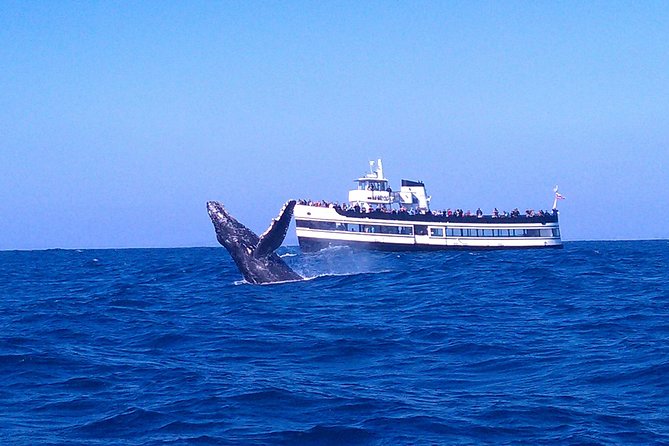
- Gray whales migrate between Alaska and Mexico, and the cruise may catch them traveling, surfacing, or briefly splashing clear of the water.
- Dolphins can be the surprise highlight, with some trips finding huge pods that swim beside the boat.
- Morning and afternoon departures have the same chance of sightings, so choose the time that best fits your San Diego plans.
- The crew uses more than narration, sometimes bringing out baleen and visual aids to explain whale biology and ocean life.
- Indoor and outdoor seating are included, but the open deck can feel cold even on a sunny day.
- A no-whale trip may qualify for a return pass, and poor-weather cancellations offer either rescheduling or a full refund.
Leaving 990 N Harbor Drive for open water
You meet at 990 N Harbor Drive in San Diego at least 30 minutes before departure. That early arrival matters because you want time to reach the loading area, get settled, and choose where you will spend the trip without rushing.
The cruise returns to the same meeting point, so you do not need to arrange a separate ride back from the harbor. The location is near public transportation, which helps if you are staying in central San Diego and do not want to drive.
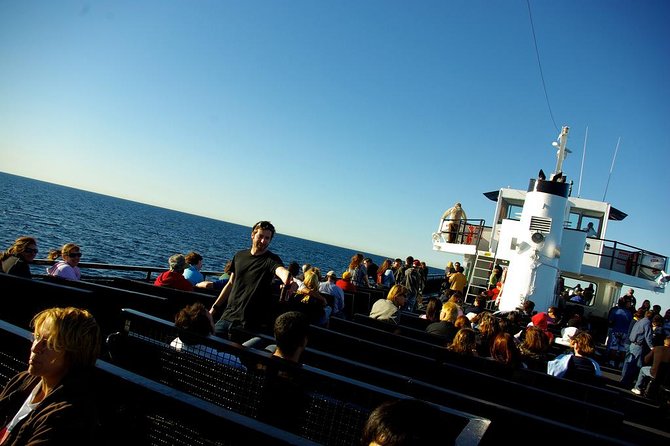
Once aboard, you can choose indoor seating or head outside. I would treat the two areas as useful parts of the same trip rather than choosing one for the full three-and-a-half hours. The indoor area gives you a break from wind and spray, while the outdoor deck gives you a wider view and a better chance of hearing the crew point out wildlife in real time.
The boat can hold up to 100 people. That is not a tiny sailing, but it is also not an enormous harbor ferry. Space to move around is useful when a whale surfaces on one side and the dolphins appear on the other.
More whale and dolphin trips out of San Diego:
- San Diego Whale Watching Cruise
★ 5.0 · 2,317 reviews - San Diego Whale Watching & Dolphin Cruise
★ 4.5 · 1,588 reviews - San Diego: Whale Watching Tour – Flagship Cruises & Events
★ 4.1 · 315 reviews
What the 3.5-hour route feels like
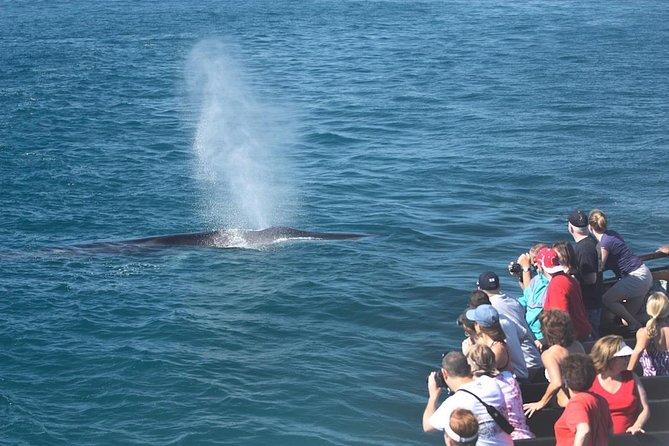
This is a half-day ocean outing, not a quick harbor loop. The cruise leaves San Diego, passes from the sheltered harbor toward open water, and spends much of its time searching for signs of whales and other animals.
The route itself matters because wildlife sightings depend on where animals happen to be that day. The boat may slow, circle, or remain in an area when the crew locates a whale or pod. On one successful trip, the captain stayed longer so everyone could watch whales for an extended period.
You should expect periods with no immediate action. That is normal for wildlife watching, but it can feel long if you arrive expecting constant sightings. The most rewarding trips often include several kinds of animals rather than one perfect whale encounter.
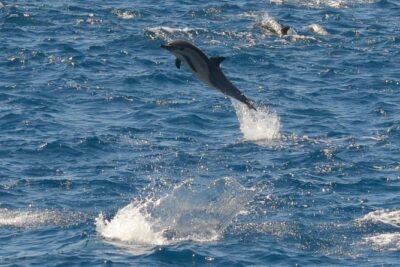
A successful outing might include gray whales, dolphins, sea lions, seabirds, jellyfish, or even military aircraft and helicopters visible around the water. Some trips have seen several gray whales surfacing together. Others have found hundreds of dolphins swimming in pods and riding the boat’s wake while the crew slowed down for a closer look.
Gray whales, fin whales, and the luck of the day
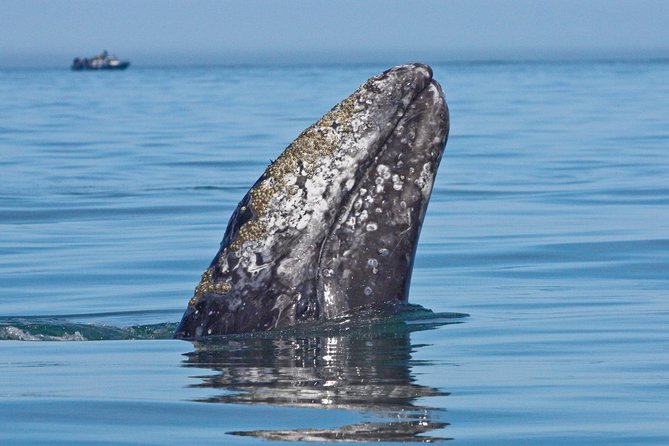
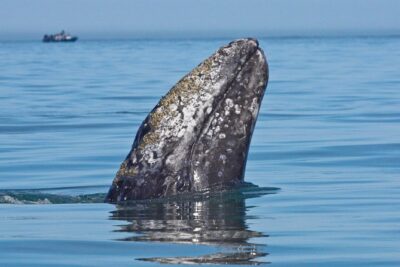
Gray whales are the main target. They migrate between Alaska and Mexico, and the guide explains their route, ocean habitat, and behavior while you search.
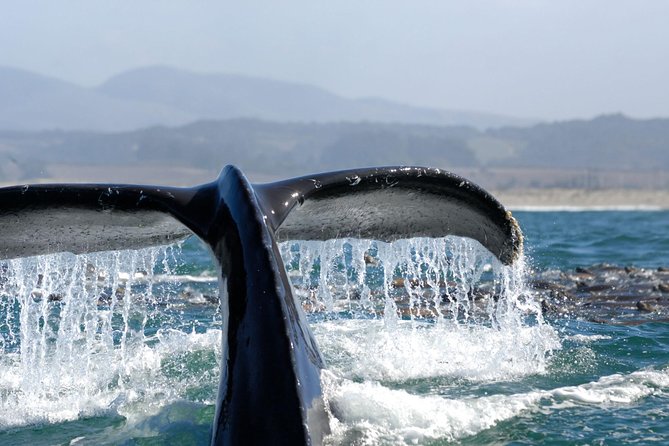
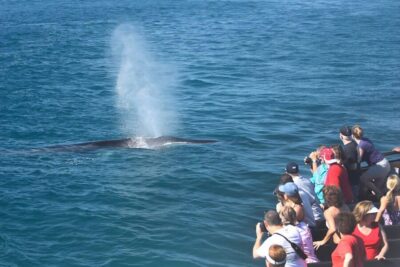
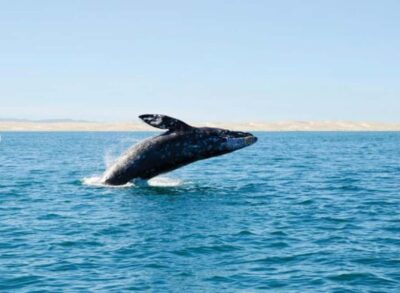
A gray whale may appear as a short puff, a back rolling above the water, or a larger splash as it surfaces. You might see it only once before it disappears. If the animal remains nearby, the captain and crew can help direct everyone’s attention to the next surfacing.
The reports from successful trips include groups of three or four gray whales, a mother and young whale, and whales traveling with dolphins. Other outings have spotted a fin whale or a juvenile humpback instead. These sightings are less predictable, which is why you should keep watching even after the main target has not appeared.
There is no whale guarantee. One onboard explanation put whale sightings at about 40 percent, though conditions and season affect the odds. The practical point is more important than the number: you can pay for a three-and-a-half-hour search and still see no large whale.
The operator may provide a return pass after a trip without a whale sighting. That gives you another chance, and the pass may not expire. It does not make the first trip more productive, but it does soften the risk for anyone with enough time in San Diego to try again.
Dolphins often become the real stars
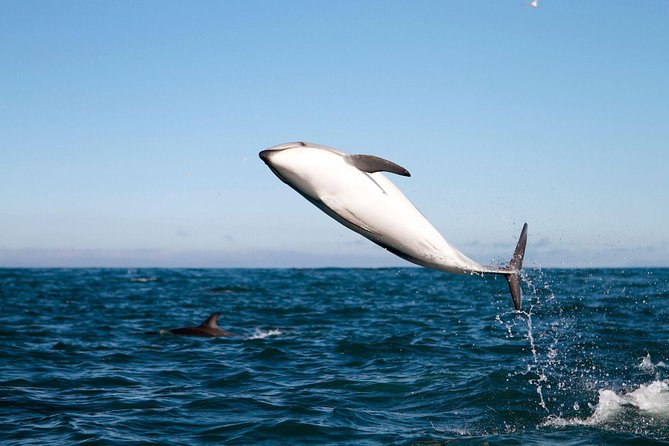
Dolphins are one of the best reasons to keep your expectations broad. Several successful cruises found large pods, with dolphins swimming alongside the boat and playing in the wake.
A dolphin sighting can be quick. The animals may appear close to the boat, then vanish a moment later. When the crew slows down and points out where to look, you have a better chance of seeing the group rather than guessing at distant splashes.
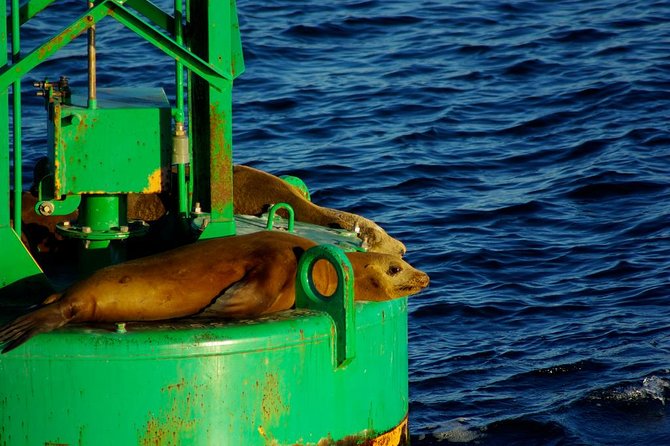
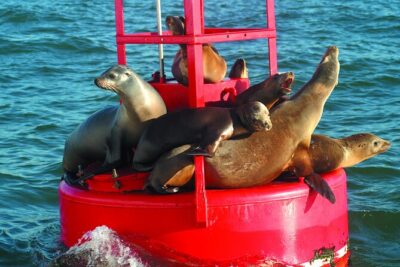
You may also see sea lions, seabirds, jellyfish, and other ocean life. These sightings add variety to the trip and help make a no-whale day feel less empty. Still, the animals are wild and free to move on, so even a large pod may not stay nearby for long.
If you are traveling with children, dolphins can be easier to appreciate than a distant whale back. Young children may lose interest during long quiet stretches, especially on a cold day. Older children and adults who enjoy wildlife, photography, or simply watching the sea will likely get more from the search.
A few more San Diego trips worth comparing
- San Diego Harbor Cruise
★ 4.5 · 2,980 reviews - San Diego: Harbor Cruise
★ 4.6 · 1,378 reviews - San Diego Harbor Dinner Cruise
★ 4.0 · 1,234 reviews - San Diego Harbor Speed Boat Adventure
★ 5.0 · 716 reviews
Guides who turn waiting time into a lesson
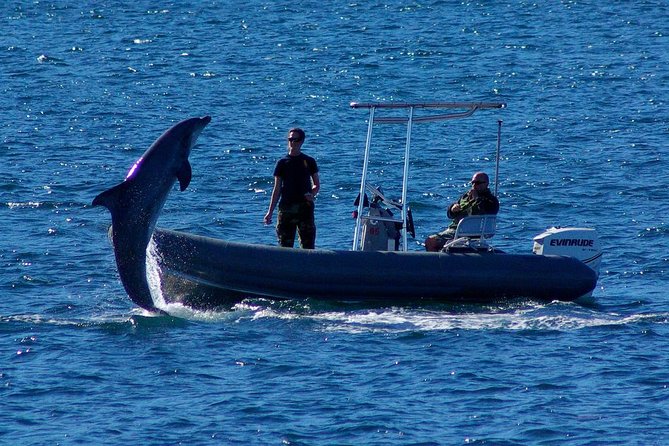
The guide does more than call out whale locations. You hear about migration, whale behavior, ocean habitats, and the other animals that share these waters.
Becca received especially strong praise for explaining the harbor, the open ocean, and the migration route from Alaska to Mexico while helping the crew find dolphin pods. Other guides have used visual aids, including an actual piece of gray whale baleen, to show how the animals feed.
That hands-on detail is valuable. Baleen is easy to misunderstand when you only hear a definition, but seeing a real plate gives you a clearer sense of how a gray whale filters food from the water. The crew also answers questions and explains sightings without filling every quiet moment with constant talk.
The narration may reach beyond wildlife. One guide pointed out naval vessels and explained details about military aircraft and helicopters seen during the outing. That extra context gives you something to notice while the boat is traveling between animal sightings.
Cold air and rolling water are part of the deal
Bring more clothing than you think you need. Even when San Diego is sunny, the temperature and wind can change quickly on the water.
A warm coat is a sensible choice, along with layers that you can remove indoors. The outdoor deck is where you will feel the wind most, and sitting outside for the full trip can become uncomfortable if you arrive in light clothes.
Motion sickness deserves serious attention. The boat can feel unsteady, and the crew advises anyone prone to seasickness to prepare before boarding. Medication works best when taken in advance, not after you already feel ill. Wristbands can also help, and Dramamine is available onboard according to trip information.
The repeated reminders about motion sickness may feel a little strong to some people, especially on a calm day. Still, the advice is practical. Bring or buy what you need before departure, use the barf bags if necessary, and do not wait until the boat reaches open water.
Food and drinks are not included in the ticket price. An onboard bar offers drinks and snack-style food, but you should not treat that as a full meal. Plan ahead, especially if you are bringing children or expect the three-and-a-half-hour trip to overlap with lunch.
Is $54 a fair price?
At $54 per person, the value depends on how you define the experience. You are paying for a half-day on the Pacific, a crew searching for wildlife, live interpretation, indoor and outdoor seating, and the chance to see animals that cannot be scheduled.
That is a fair price if you enjoy the process of wildlife watching. The strongest outings can include gray whales, dolphins, sea lions, and other sights in one trip. Seeing four gray whales surface together or watching a huge pod of dolphins travel beside the boat can make the fare feel very reasonable.
The value is weaker if your only goal is a close whale photograph. Sightings can be brief, distant, or absent. A return pass after a no-whale trip helps, but you still need another free block of time and another day with better luck.
I would compare this with the cost of other half-day San Diego activities. The cruise uses a substantial part of your day but leaves the morning or afternoon free, depending on your booking. That makes it easier to combine with harbor sightseeing, museums, or other city plans.
Morning or afternoon: choose for your schedule
The operator states that the odds of spotting a whale are the same in the morning and afternoon. Whales do not follow a timetable, so you should choose the departure that fits your day.
An afternoon trip may work well if you want a relaxed morning in San Diego. A morning trip leaves the rest of the day open afterward, which can be useful if the cruise is one part of a packed visit.
The same logic applies to the day of the week. There is no stated advantage to one weekday over another. Pick the date that works best, then focus on weather, clothing, and motion-sickness preparation.
The cruise is often booked about eight days ahead, so I would not wait until the last minute if your San Diego schedule is tight. A mobile ticket makes entry simpler, and confirmation arrives when you book.
Who should book this cruise
I would recommend it to adults, couples, families with older children, and anyone who likes marine life enough to enjoy waiting and watching. It suits people who want an informative ocean outing rather than a fast thrill ride.
It is also a good fit if you have flexibility for a second attempt. The return-pass option matters most to visitors staying several days, since a no-whale trip may be disappointing but does not have to be your only chance.
I would think twice if you need a guaranteed sighting, dislike cold wind, or are highly sensitive to motion. The crew can offer guidance, but no one can control the sea or the animals.
Service animals are allowed, and most people can take part. The activity is offered in English. If you need a precise seating arrangement or have a particular mobility concern, confirm details before booking, since the available information only states that indoor and outdoor seating are provided.
Cancellation and weather details
You can cancel for a full refund up to 24 hours before the start time. Cancellations or changes made within 24 hours are not refunded or accepted.
The cruise depends on good weather. If poor conditions cancel the departure, you can choose another date or receive a full refund. The company aims to contact you in the morning using the phone number provided at booking, so keep that contact information current.
My recommendation for San Diego visitors
Book this cruise if you see it as a wildlife search with a strong chance of dolphins and a possible whale sighting, not as a guaranteed whale show. The crew’s persistence, clear explanations, and return-pass policy make the risk easier to accept.
For the best experience, arrive early, wear warm layers, prepare for seasickness before boarding, and keep your eyes moving across the water. If you want a half-day outside with the chance to see gray whales, fin whales, humpbacks, dolphins, and sea lions, $54 is a sensible use of your San Diego time. If a whale is the only acceptable result, save this for a visit long enough to use the return option.
FAQ
How long is the San Diego whale-watching cruise?
The cruise lasts approximately 3 hours and 30 minutes.
Where does the cruise depart?
The meeting point is 990 N Harbor Drive, San Diego, California 92101.
Where does the cruise end?
The activity ends back at the original meeting point.
How early should I arrive?
You should meet at the pier at least 30 minutes before your scheduled departure.
Are morning and afternoon departures available?
Yes. You can choose either a morning or afternoon departure.
Is whale watching guaranteed?
No. Whale sightings are not guaranteed. The cruise may also find dolphins, sea lions, seabirds, jellyfish, or other marine life.
What kind of whales might I see?
Gray whales are the main species mentioned, but trips have also seen fin whales and juvenile humpback whales.
Is seating available indoors?
Yes. Indoor and outdoor seating are included.
Should I bring warm clothing?
Yes. Dress in layers because wind and temperature can change on the water, even when the day is sunny.
What happens if bad weather cancels the cruise?
You can reschedule for another day or receive a full refund if the departure is canceled because of poor weather.
Just added around San Diego
- San Salvador 16th Century Galleon Sail w/ Museum Admission★ 5.0 · 3 reviews
- San Diego: Downtown Electric GoCar Rental★ 5.0 · 3 reviews
- Private Cooking Demonstration of Indian Fusion Cuisine in San Diego★ 5.0 · 3 reviews
- Private Shuttled Coastal Gems Scenic Customizable Tour★ 5.0 · 3 reviews
- San Diego: 2024 Crystal Clear Kayak Rental★ 4.7 · 3 reviews
- San Diego: Californian Tall Ship Sailing and Maritime Museum★ 5.0 · 3 reviews
- Paranormal Investigation History & Ghost Tour Old Town San Diego★ 5.0 · 3 reviews
- Mysteries on the Move: Scavenger Hunt in San Diego★ 3.0 · 3 reviews
San Diego Whale & Dolphin Watching, compared.
Whale Watching Tour – Flagship Cruises & Events
Read our review →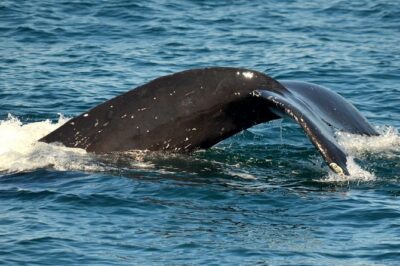
City Cruises San Diego: Whale and Dolphin Watching Adventure
Read our review →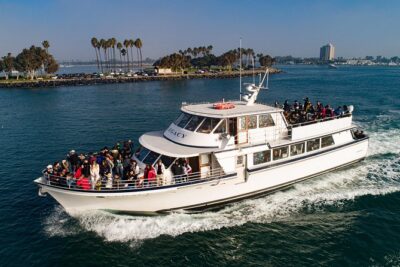
Browse the lists this tour appears in