
Reviewed · SAN DIEGO WHALE & DOLPHIN WATCHING
San Diego: Whale and Dolphin Watching Cruise
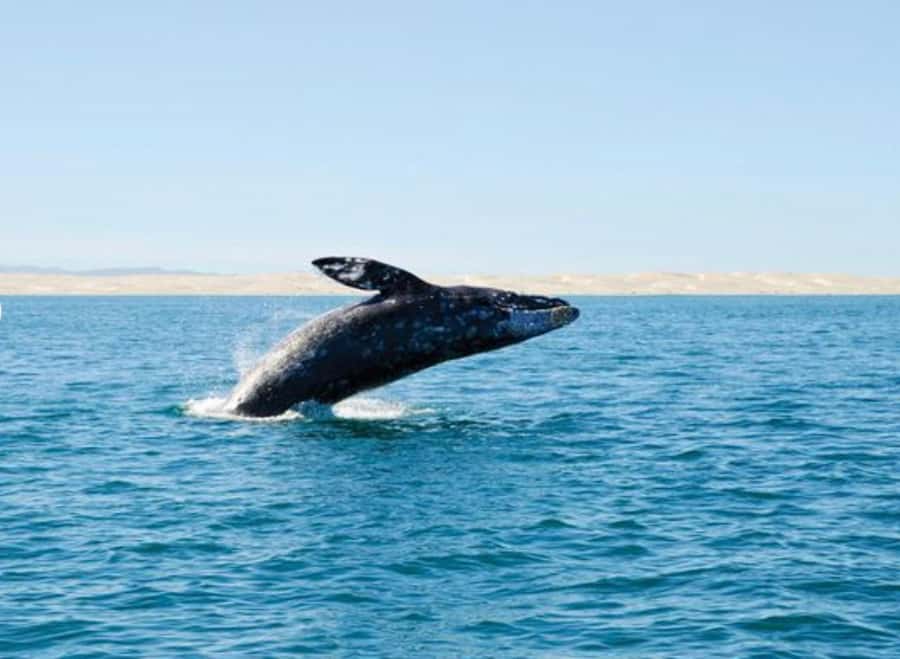
San Diego’s whale-watching season never really ends. Gray whales pass the coast during their winter and spring journey between Alaska and Baja California, while enormous blue whales often feed offshore in summer. The same four-hour cruise may also bring dolphins racing beside the boat, sea lions, sunfish, seabirds, and the occasional fin, humpback, or minke whale.
I like two things in particular: the museum naturalists add real substance, and the crew treats the wildlife with care rather than chasing animals for a close photograph. I also like the whale-or-dolphin guarantee, which gives you a return pass if the ocean stays stubbornly empty.
The catch is simple: wildlife follows its own schedule. You could see hundreds of dolphins and no whale, or a whale spout may appear only briefly in the distance. Bring a jacket, and plan for motion on the open Pacific.
In This Review
- Key points at a glance
- Why San Diego works for whale watching
- From Pier 2 into San Diego Harbor
- Searching the open Pacific for whales
- Dolphins, sea lions, and the moments that make the trip
- What four hours feels like on board
- Is the $77 price good value?
- Best times to book and how to prepare
- Who should book this cruise?
- Should you book it?
- FAQ
- Where does the whale-watching cruise depart?
- How long does the cruise last?
- What wildlife might I see?
- What happens if I see no whale or dolphin?
- Is food included?
- Is the cruise wheelchair accessible?
Key points at a glance
- Gray whales in winter and spring: Watch for mothers and calves traveling between Arctic feeding waters and Baja California’s calving lagoons.
- Blue whales in summer: These are the largest animals on Earth and often feed off San Diego’s coast during the summer season.
- Dolphins can provide the action: Common, Risso’s, Pacific white-sided, and bottlenose dolphins may gather in fast-moving pods.
- Naturalists from the Natural History Museum: The live narration covers wildlife, the port, local environmental work, and ships around San Diego Harbor.
- A four-hour ocean outing: You get indoor and outdoor seating, but outer decks are reached by stairs.
- Whale-or-dolphin guarantee: If you see neither, you receive a pass for another whale-watching or harbor cruise.
Why San Diego works for whale watching
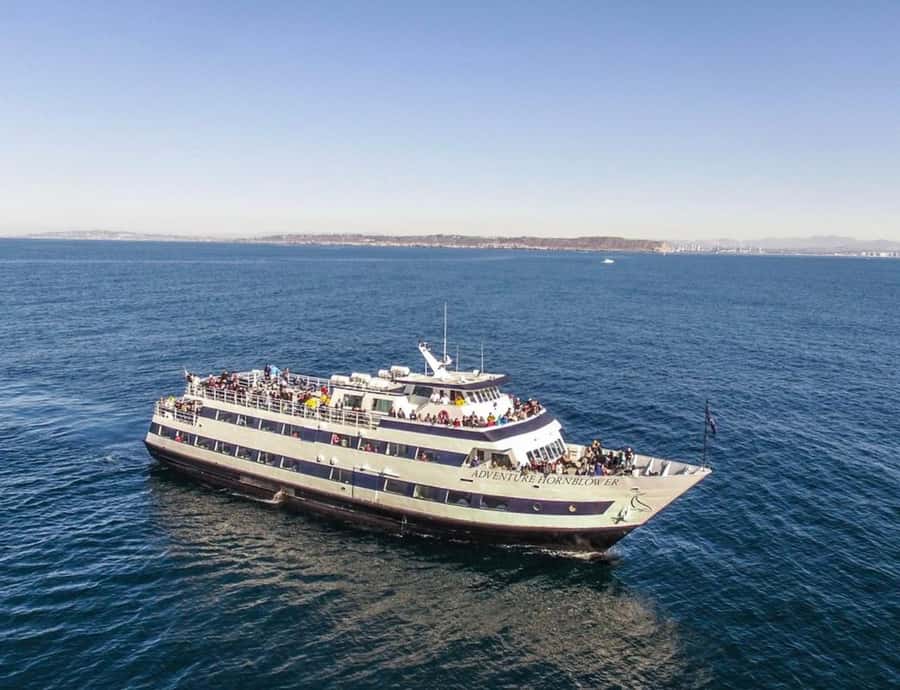
San Diego gives you a good chance to see marine life in any season, but the species change through the year. Gray whales migrate north and south along the Pacific coast in winter and spring, heading from Alaskan feeding grounds to lagoons in Baja California and then back again.
That seasonal journey makes gray whales the main draw early in the year. You might see a lone whale surface, a mother traveling with a calf, or only a distant spout before the animal disappears below the water. Sightings are wild encounters, not scheduled performances, so patience matters.
Summer brings a different possibility. Blue whales, the largest animals ever known to have lived, commonly feed offshore near San Diego. You might also encounter fin whales, humpback whales, or minke whales during the summer season.
Dolphins are often easier to find than whales. The cruise may pass pods of common dolphins, Risso’s dolphins, Pacific white-sided dolphins, or bottlenose dolphins. The most exciting sightings can come when dolphins swim beside the boat or gather in a feeding frenzy. One especially fortunate outing recorded hundreds of common dolphins, along with a mako shark, a sunfish, a fin whale, and a fast-moving blue whale.
That is the right way to think about this trip. A whale is the headline, but the full cast includes dolphins, sea lions, harbor seals, fish, and birds. If you judge the day only by the number of whales, you may miss much of what is happening around you.
More whale and dolphin trips out of San Diego:
- San Diego Whale Watching Cruise
★ 5.0 · 2,317 reviews - San Diego Whale Watching & Dolphin Cruise
★ 4.5 · 1,588 reviews - San Diego Whale Watching Cruise
★ 4.5 · 663 reviews
From Pier 2 into San Diego Harbor
The cruise leaves from Pier 2 at 970 North Harbor Drive and returns to the same place. You arrange your own way to the harbor, since hotel transportation is not included.
Allow time to find the pier and deal with parking. Parking has been a frustration for some people, so do not cut your arrival too close. You will need a photo ID to board because of Coast Guard regulations.
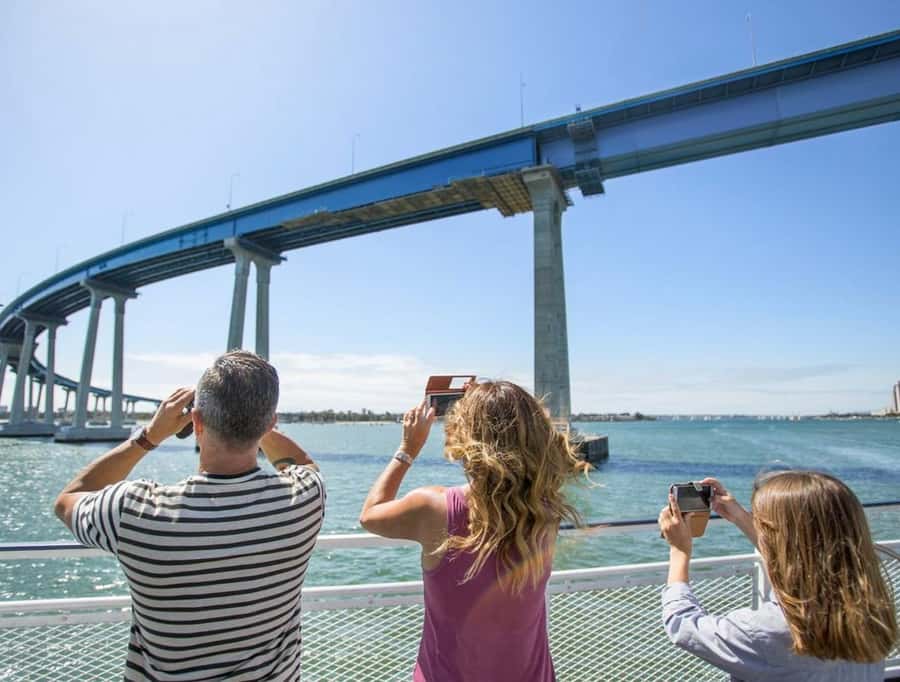
The harbor departure is more than a quick trip past office buildings. As the boat moves out, the captain and naturalists may point out San Diego’s port, ships, military equipment, and other working waterfront details. This part gives you useful context before the boat reaches open water.
I like this start because it makes the cruise feel connected to San Diego rather than like a generic wildlife outing. You are not only scanning the horizon. You are also seeing an active harbor and learning how the city’s waterfront functions.
The narration is in English. The crew includes professional captains and volunteer naturalists associated with the San Diego Natural History Museum. Their subject matter can range from whales and dolphins to seabirds, local environmental efforts, and the vessels around the harbor.
One practical point: the naturalists may be stationed on one level of the boat. If you move to another deck, you may not hear every part of the commentary clearly. Staying near the main narration area is wise if learning about the animals matters as much to you as seeing them.
Searching the open Pacific for whales
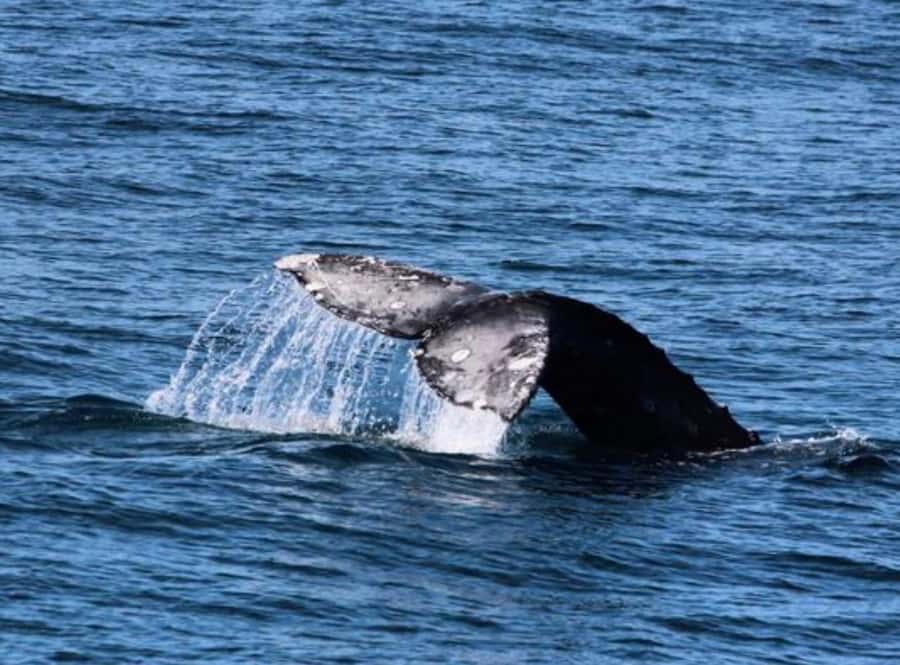
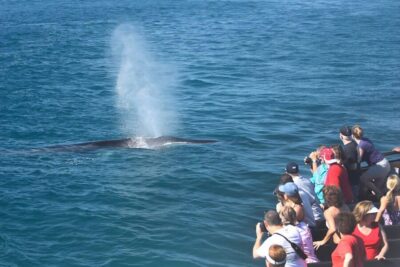
Once the boat reaches the open ocean, the rhythm changes. You are watching wide stretches of dark blue water for a blow, a dorsal fin, a back, or a sudden flash of movement. The crew works with sightings and reports from other boats, then directs the captain toward promising areas.
A whale may surface twice and vanish. That happened on one outing when the captain located a pod of three whales and brought the boat close enough for two exciting surface appearances, while still keeping a respectful distance.
This is also where you should set your expectations. The boat can search hard and still find no whale. On some trips, the only whale appears far away. On others, dolphins provide nearly all the action. The guarantee helps soften that risk, but it cannot turn the next trip into a promise of blue whales.
The crew’s approach matters. Captains are expected to avoid approaching too close, and that is good practice for both the animals and the quality of the encounter. A hurried boat pressing toward a whale may give you a larger image but a poorer wildlife experience.
Keep your eyes moving. Whales are not the only things worth spotting. The captain may call out sea lions, harbor seals, mola mola, also called sunfish, and marine birds such as herons, terns, pelicans, and gulls.
A sunfish can be an especially fun surprise. It is a strange-looking, oversized fish that often appears near the surface. Seabirds also help you read the ocean. A concentration of birds may signal fish below, which can attract dolphins and larger animals.
Dolphins, sea lions, and the moments that make the trip
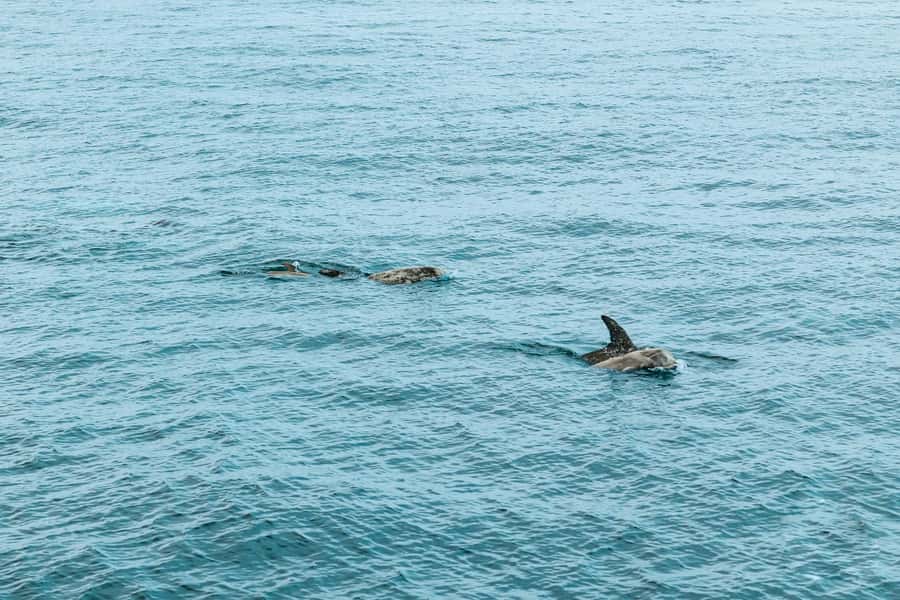
Dolphins often bring the most immediate excitement. They may travel beside the boat, surface in groups, or move quickly through the water in a feeding frenzy. Their speed makes them easier to appreciate in person than in a photograph.
The cruise may encounter several dolphin species, including common dolphins, Risso’s dolphins, Pacific white-sided dolphins, and bottlenose dolphins. You may see only a few animals, or a large pod spread across the water.
This is one reason I would not book the cruise only during the season you associate with whales. A summer trip may produce blue whales, humpbacks, fin whales, dolphins, and sunfish. A winter or spring cruise may focus more on gray whales, with dolphins and other marine life filling out the outing.
Some trips produce a memorable mix. One outing included many dolphins and a fin whale, while another found humpback whales, a mola sunfish, and plenty of dolphins. Other trips produced dolphins but no whales at all. The variety is part of the appeal, but the uncertainty is real.
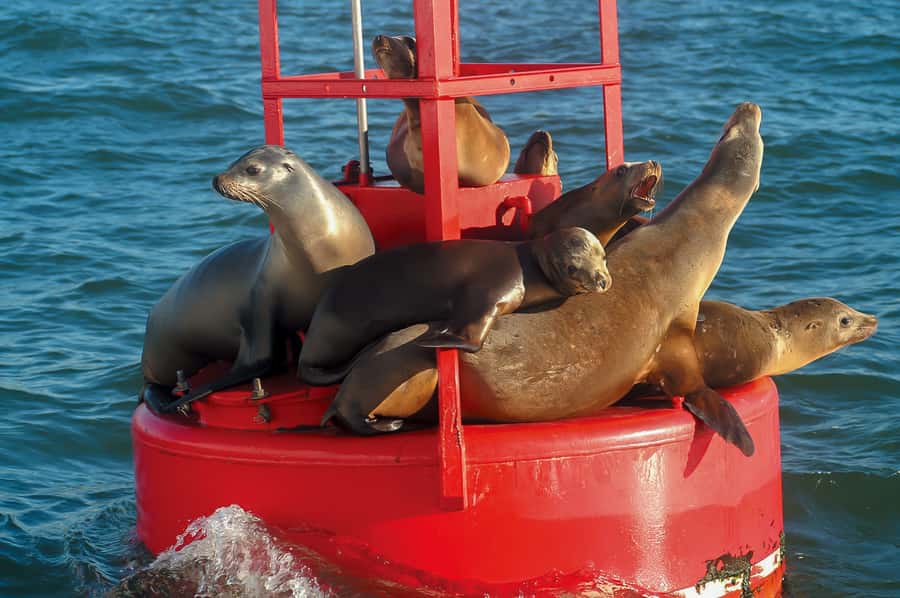
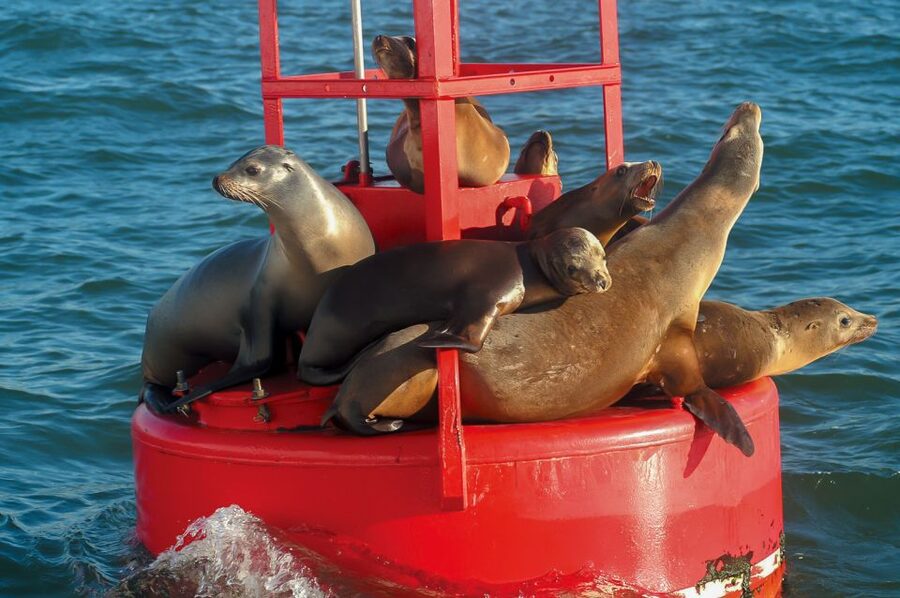
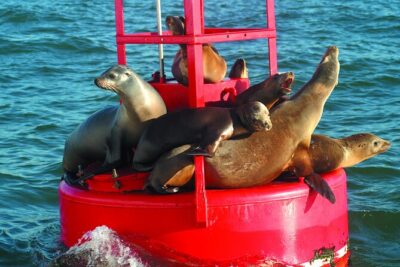
Sea lions and harbor seals may appear around the harbor or offshore. The crew can also identify fish and birds, giving children plenty to watch when whales stay underwater.
For families, that variety helps. Younger children may lose interest during long stretches of empty water, but a pod of dolphins or a sea lion can bring everyone back to the rail. For adults, the quiet time is not wasted. It gives you a chance to watch the sea, listen to the narration, and enjoy San Diego from a different angle.
A few more San Diego trips worth comparing
- San Diego Harbor Cruise
★ 4.5 · 2,980 reviews - San Diego: Harbor Cruise
★ 4.6 · 1,378 reviews - San Diego Harbor Dinner Cruise
★ 4.0 · 1,234 reviews - San Diego Harbor Speed Boat Adventure
★ 5.0 · 716 reviews
What four hours feels like on board
The cruise lasts about three and a half to four hours, depending on the departure you select. That is long enough to reach productive offshore water, but it is also a serious block of time on a moving boat.
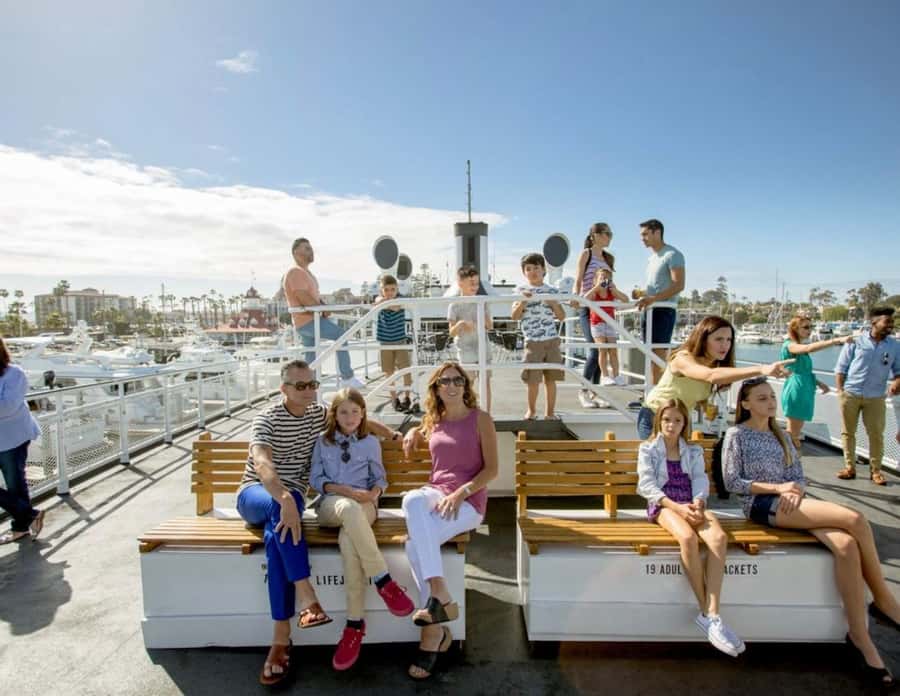
You get indoor and outdoor seating. The outside decks offer the best chance for clear views and fresh air, but the ocean can feel cold even when San Diego is sunny. Pack the jacket listed by the operator, along with sunglasses and a sun hat.
Outdoor deck access is by stairs only. Current restrictions also mean the cruise should not be treated as wheelchair accessible, despite general activity information describing accessible facilities. The specific notice says it is temporarily not suitable for wheelchair users because of outdoor seating restrictions, so confirm the current setup before booking if mobility is a concern.
Seasickness is another consideration. Several people had a rough time on the water, and one particularly useful piece of advice was to consider motion sickness medicine. If you are prone to seasickness, speak with a medical professional or pharmacist before the trip, and do not wait until the boat is already moving to think about it.
Food and drinks are available to buy on board, but they are not included in the $77 price. You should plan for the possibility of spending more, especially if you are traveling with children.
If you want to sit together, place one reservation for the whole party. Separate bookings do not guarantee seats together. That detail is easy to miss and matters on a family outing.
Is the $77 price good value?
At $77 per person, this is not a cheap harbor ride, but the length helps justify the cost. You are paying for three and a half to four hours on the water, a large and stable boat, live narration, indoor and outdoor seating, and access to a crew focused on finding marine life.
The museum connection adds value. The narration covers more than simple species names. You can learn about the animals, San Diego Harbor, local conservation work, and the ships and equipment around the port.
The whale-or-dolphin guarantee also makes the price easier to accept. If you see neither, you receive a pass for another San Diego whale-watching or harbor cruise. That does not guarantee that the second trip will produce a whale, and you still have to arrange another visit, but it gives you a fair chance to try again.
The value is strongest if you enjoy the whole outing: the harbor views, the educational talk, seabirds, dolphins, and the open-water setting. It is weaker if you want a guaranteed close-up whale sighting on a single specific day.
Compare it with the cost of other half-day San Diego activities, and the cruise offers a substantial amount of time. Just remember to include parking, transport to North Harbor Drive, and any food or drinks purchased on board.
Best times to book and how to prepare
Choose winter or spring if gray whales are your priority. Choose summer if blue whales, fin whales, humpbacks, and minke whales interest you. Neither season guarantees a sighting, but the seasonal patterns improve your odds of seeing the species you hope for.
The start time varies, so check availability for the date you want. Since the activity lasts four hours, think about what you place before and after it. A late return could make a tightly scheduled afternoon inconvenient.
Bring:
- Sunglasses
- A sun hat
- A warm jacket
Wear something comfortable for standing and moving between viewing areas. If you want to hear the naturalists, remain near the main narration area rather than settling far away on another level.
For photographs, keep your camera ready but do not let it take over. Whales surface quickly, and dolphins may appear on either side of the boat. Watch first, photograph second.
Who should book this cruise?
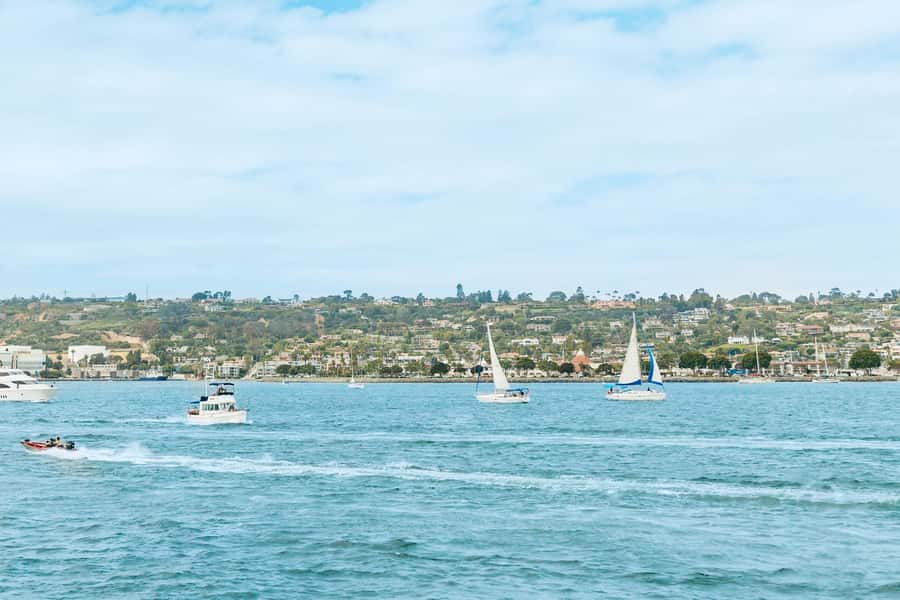
I would recommend it to families, couples, solo visitors, and San Diego residents who want a half-day on the Pacific. It suits anyone who enjoys wildlife, coastal views, and live interpretation rather than a simple boat transfer.
It is particularly good for families because the wildlife list is broad. Even when whales do not appear, dolphins, sea lions, birds, and sunfish can keep the outing interesting.
It also works well for repeat visitors. The harbor commentary and environmental focus give the trip more depth than a standard sightseeing loop, while the changing wildlife means two trips may feel quite different.
I would hesitate if you have very limited time in San Diego, get badly seasick, or need guaranteed wheelchair access. I would also be cautious if a whale sighting is the only reason you want to go. The crew can search diligently, but no responsible wildlife operator can control the ocean.
Should you book it?
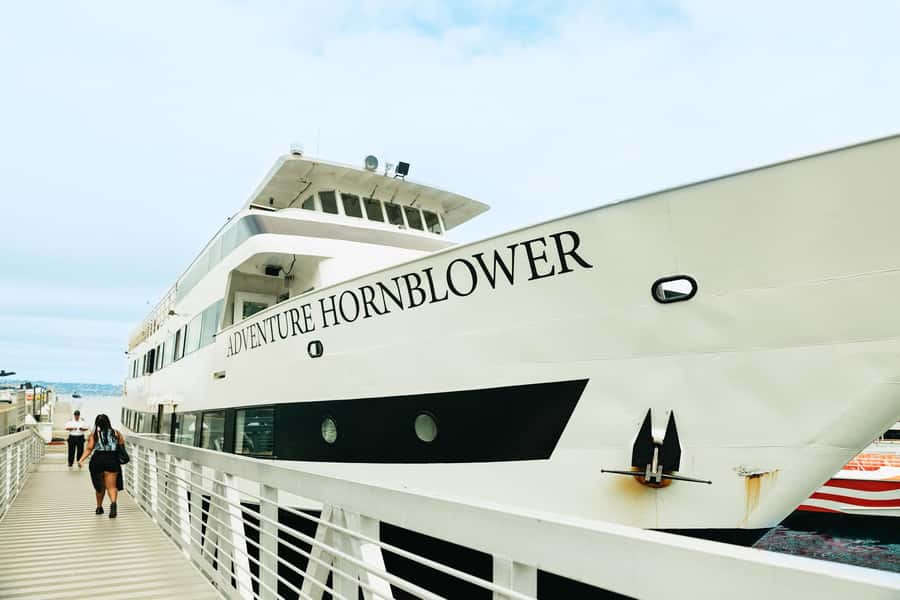
Book this cruise if you want a full ocean outing with expert narration and a real chance to see dolphins, gray whales, blue whales, and other wildlife. The whale-or-dolphin guarantee, museum naturalists, and four-hour duration make the $77 fare reasonable for the right kind of day.
Choose your season with care, dress warmly, and leave room in your plans for nature to be unpredictable. If you can accept that a pod of dolphins may become the main event, this is a strong way to experience San Diego’s coast.
FAQ
Where does the whale-watching cruise depart?
The cruise departs from Pier 2 at 970 North Harbor Drive in San Diego Harbor and returns to the same meeting point.
How long does the cruise last?
The cruise lasts approximately three and a half to four hours. Check availability for the departure times offered on your date.
What wildlife might I see?
You might see gray whales, blue whales, fin whales, humpback whales, minke whales, common dolphins, Risso’s dolphins, Pacific white-sided dolphins, bottlenose dolphins, sea lions, harbor seals, mola mola, and marine birds.
What happens if I see no whale or dolphin?
If you do not see any type of whale or dolphin, you receive a pass valid for another San Diego whale-watching or harbor cruise.
Is food included?
No. Food and drinks are not included, but they can be purchased on board.
Is the cruise wheelchair accessible?
Current information says the activity is temporarily not suitable for wheelchair users because access to the outer decks is by stairs and outdoor seating restrictions apply. Confirm the current arrangement before booking.
Just added around San Diego
- San Salvador 16th Century Galleon Sail w/ Museum Admission★ 5.0 · 3 reviews
- Private Cooking Demonstration of Indian Fusion Cuisine in San Diego★ 5.0 · 3 reviews
- Private Shuttled Coastal Gems Scenic Customizable Tour★ 5.0 · 3 reviews
- San Diego: Downtown Electric GoCar Rental★ 5.0 · 3 reviews
- San Diego: 2024 Crystal Clear Kayak Rental★ 4.7 · 3 reviews
- San Diego: Californian Tall Ship Sailing and Maritime Museum★ 5.0 · 3 reviews
- Paranormal Investigation History & Ghost Tour Old Town San Diego★ 5.0 · 3 reviews
- Mysteries on the Move: Scavenger Hunt in San Diego★ 3.0 · 3 reviews
San Diego Whale & Dolphin Watching, compared.
Whale Watching Tour – Flagship Cruises & Events
Read our review →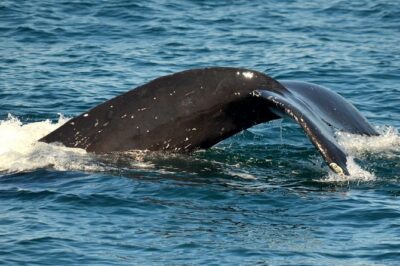
City Cruises San Diego: Whale and Dolphin Watching Adventure
Read our review →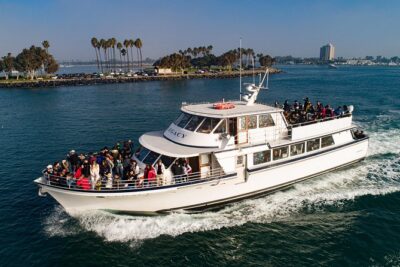
Browse the lists this tour appears in