
Reviewed · WORKSHOPS
Intro to Wild Clay/Earthenware Pottery Workshop
The unusual part of this three-hour pottery workshop is that your clay lesson begins outdoors, near Lake Cuyamaca. Becky Sangha shows you how to identify clay in the wild, process harvested material, and turn it into a small earthenware vessel.
I like the hands-on work and the strong sense of place. I also like that you leave with instructions for firing your pot in an open fire at home, rather than ending with a craft that exists only for the afternoon. The main consideration is that your finished piece is not fired during the workshop, so you will need to handle that final step yourself.
In This Review
- Key points to know before you book
- A pottery class built around the clay beneath your feet
- Meeting Becky Sangha near Lake Cuyamaca
- Learning to identify clay in the wild
- Shaping your own small earthenware vessel
- What makes the Lake Cuyamaca location worthwhile
- Taking the unfinished pot home
- Is $72 a fair price?
- Who will enjoy this workshop most
- Timing, weather, and cancellation details
- The small details that make this more than a craft class
- Should you book the Lake Cuyamaca pottery workshop?
- FAQ
- Where does the pottery workshop meet?
- Where does the activity end?
- How long does the workshop last?
- What will I make during the class?
- Is the workshop private?
- Can I cancel for a full refund?
Key points to know before you book
- Wild clay comes first: You learn how to identify and process naturally harvested clay before shaping your vessel.
- Lake Cuyamaca setting: The workshop takes place near a scenic mountain lake in the Julian area.
- Becky Sangha leads the class: Her teaching includes local stories, cultural context, and a personal connection to the craft.
- You make a small vessel: Expect a practical, beginner-friendly project rather than a large or highly technical pottery session.
- Private group format: Only your own group participates, which gives the workshop a more personal feel.
- Plan for the final firing: You take home instructions for firing the pot in an open fire, but the workshop itself does not complete that step.
A pottery class built around the clay beneath your feet
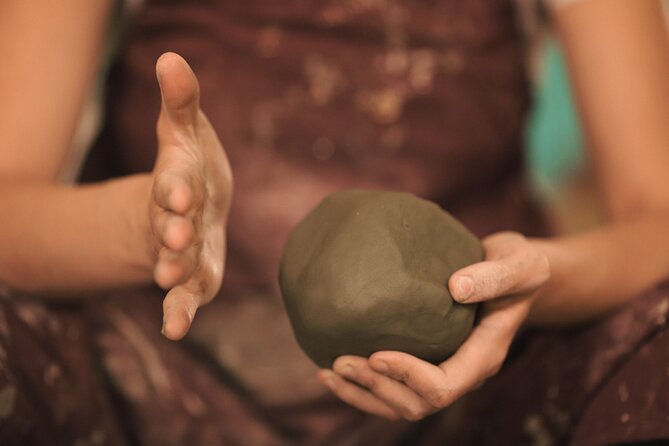
Most pottery classes begin with prepared clay waiting on a table. This one takes a more elemental route. At Lake Cuyamaca, you learn to look at local soil and clay as a useful natural material, then work through the steps that make it suitable for earthenware.
That change in perspective is the real value here. You are not simply decorating a pre-made object. You are learning where clay comes from, how it is processed, and how people can turn an ordinary-looking patch of earth into something useful and lasting.
The setting adds to the lesson without requiring a full day of sightseeing. The meeting point is The Pub at Lake Cuyamaca, at 15027 CA-79 in Julian. The activity begins and ends at that same meeting point, so you do not need to arrange a separate return transfer.
You should expect a relaxed outdoor workshop rather than a fast-paced class. The full session lasts about three hours, enough time to hear the explanation, work with the raw material, and shape your own small vessel without treating the process like a race.
A few more San Diego trips worth comparing
- Onewheel Electric Hoverboard Lesson and Bay Ride
★ 5.0 · 98 reviews - Stand up Paddle Board Lesson on The San Diego Bay
★ 5.0 · 25 reviews - Semi-Private Surf Lesson
★ 5.0 · 19 reviews
Meeting Becky Sangha near Lake Cuyamaca
Becky Sangha is the host and instructor. The class is conducted in English, and the private format means only your group takes part. That matters if you prefer to ask questions freely or want an activity that feels less like a scheduled demonstration and more like a conversation around a shared project.
Becky’s approach also reaches beyond the mechanics of pottery. The class includes stories connected to local history, culture, and the natural materials used in the work. That gives the session more depth than a simple craft appointment.
I would think of Becky as a guide to both a process and a point of view. You learn how she understands wild clay and why the material matters, while also getting time to make something with your own hands.
The supplied feedback gives her teaching a particularly strong record: the experience has a 5.0 rating from 10 reviews, with 100 percent of participants recommending it. The praise focuses on her friendly manner, authenticity, local knowledge, and ability to make the class feel easy and enjoyable. One family described the class as a relaxing way to spend part of a vacation, while another praised the chance to learn about Julian’s culture and history through making.
That kind of response is useful if you are choosing between a polished studio class and a more personal workshop. This activity depends heavily on the instructor, and Becky appears to be a major part of its appeal.
Learning to identify clay in the wild
The first subject is not shaping. It is recognition.
You learn how to identify clay in its natural setting. That sounds simple, but it changes how you look at the ground around you. Instead of treating soil as a background detail, you begin to consider its color, feel, and possible use.
The class then covers how harvested clay is processed. The supplied details do not specify every tool or stage, so I would not book this expecting a technical laboratory course with a full materials-science lesson. You can expect an introduction that connects the raw clay to the finished earthenware piece.
That beginner-friendly focus is a strength. You do not need previous pottery experience to understand the basic idea: find suitable clay, prepare it, shape it, and eventually fire it. The work stays connected to the land rather than separating pottery from its source.
The outdoor setting may also make the lesson more memorable. You are learning about local material in the same broad area where the class takes place, not only hearing an abstract explanation indoors.
Shaping your own small earthenware vessel
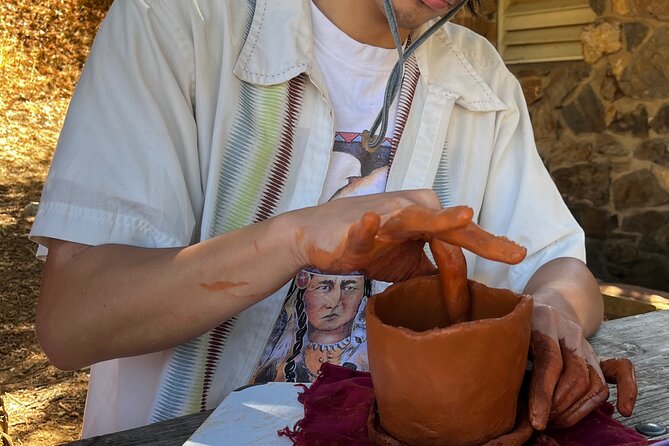
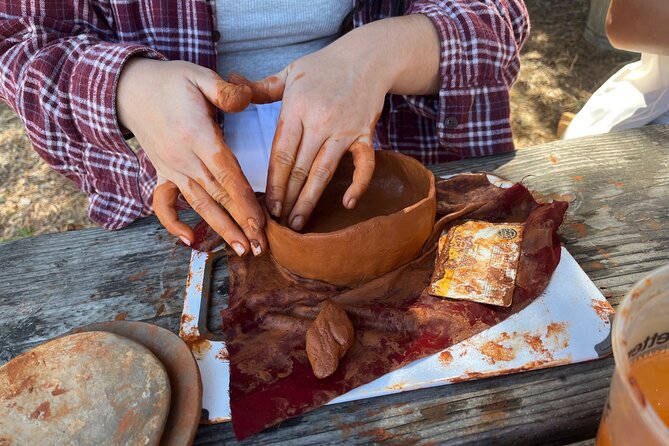
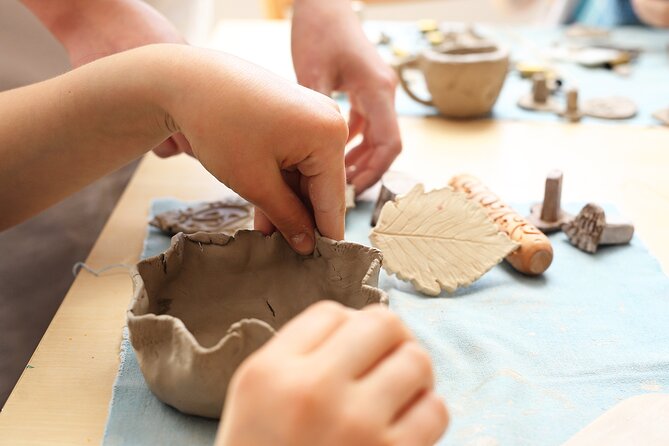
After learning about wild clay and its preparation, you make and design a small earthenware vessel. The project may be a pot, mug, or another small form, depending on the activity and your group’s choices.
Keep your expectations realistic. This is not presented as a professional wheel-throwing course, and there is no promise of a large finished object or advanced ceramic technique. The goal is to work directly with the material and create something personal.
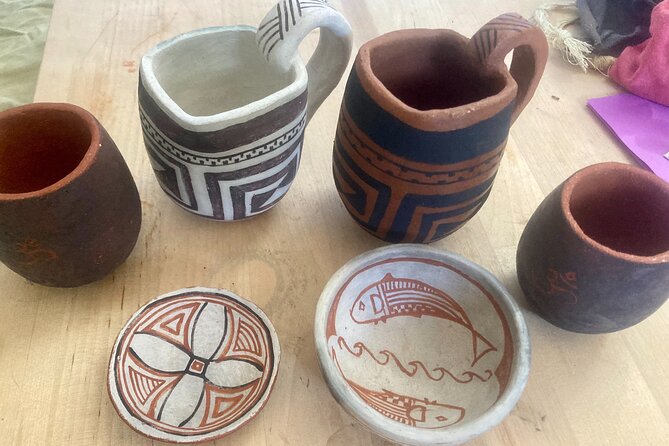
That makes the class a good fit for first-time makers. You can focus on the feel of the clay and the shape of your piece instead of worrying about producing gallery-quality pottery. The feedback describes the finished pots and mugs as lovely, but the greater reward is the process and the story attached to the object.
You also get to design the vessel. That gives the experience a creative side without requiring you to arrive with a plan. If you like practical crafts, you can concentrate on form and use. If you prefer a more artistic project, you can give your pot a shape that reflects your own taste.
The small scale is worth noting. A small vessel is manageable during a three-hour session and easier to carry home, but it may feel limited if you already have serious pottery experience and want a long technical lesson.
Same city, a completely different kind of day:
- San Diego Zoo 1-Day Pass: Any Day Ticket
★ 4.5 · 4,248 reviews - San Diego Harbor Cruise
★ 4.5 · 2,980 reviews - San Diego Hop On Hop Off Trolley Tour
★ 4.5 · 2,523 reviews - San Diego Whale Watching Cruise
★ 5.0 · 2,317 reviews
What makes the Lake Cuyamaca location worthwhile
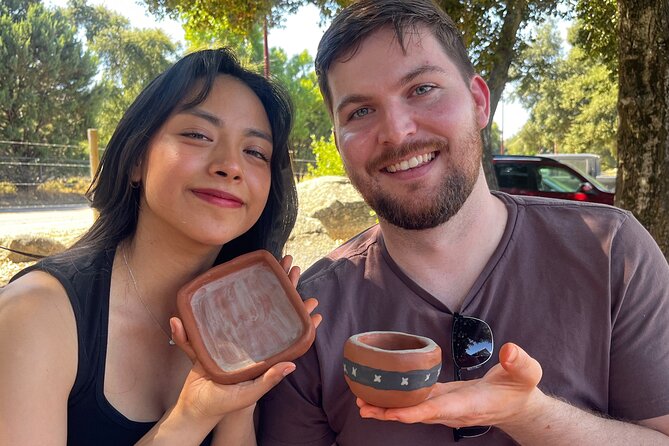
Lake Cuyamaca provides more than a meeting point. It places the workshop in a quiet Julian-area setting where the subject of local clay feels tied to the surroundings.
The attraction is not a checklist of viewpoints or a long route between stops. There is one main location, and the activity ends where it begins. That simplicity keeps the focus on the material, the instructor, and your project.
You should still prepare for an outdoor setting. The physical requirement is listed as moderate, and the class depends on good weather. That does not mean you need an athlete’s fitness level, but you should be comfortable taking part in a hands-on activity in the Lake Cuyamaca area.
Service animals are allowed. The available information does not provide detailed terrain, seating, restroom, or equipment-access information, so contact Becky before booking if your group has specific mobility needs.
The setting also makes this a useful addition to a Julian visit. You can spend part of your day on a creative activity connected to the area rather than choosing another standard sightseeing stop. The class is especially appealing if you enjoy local stories, natural materials, and activities that leave you with something made by hand.
Taking the unfinished pot home
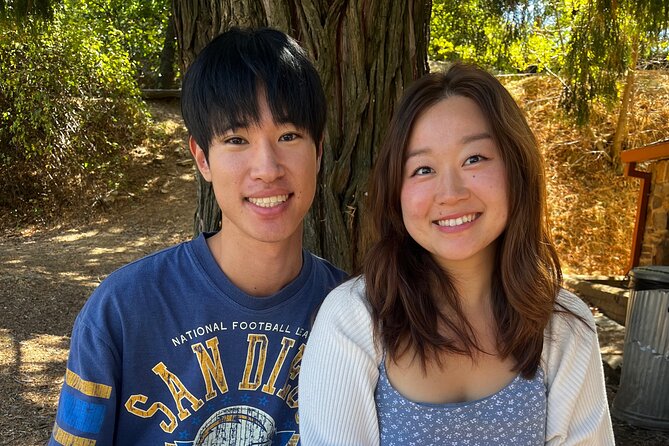
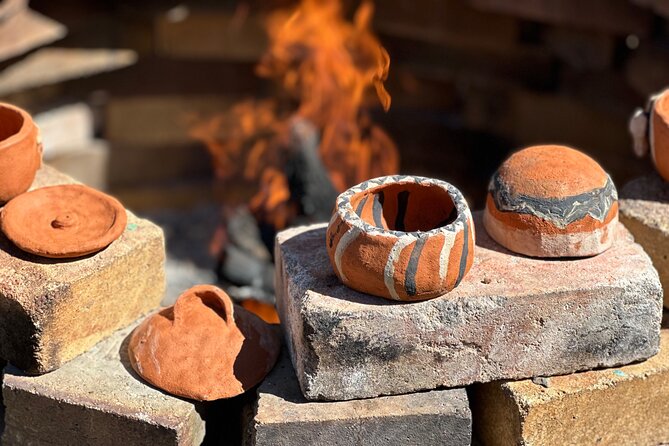
The workshop does not finish with a kiln-fired object placed in your hands. Instead, you go home with your pot and instructions for firing it in an open fire.
This is both the most distinctive feature and the main practical catch. The instructions extend the experience beyond the scheduled three hours. You can continue the project later and see whether your vessel survives the firing process.
At the same time, you need to understand what you are buying. The $72 price covers the workshop and instruction, not a completed ceramic piece at the end of the session. You will need to follow the provided firing directions on your own, and the final result depends on that later step.
For me, this makes the workshop feel more like an introduction to an old craft than a standard souvenir-making class. The pot remains part of a longer process. You learn the beginning, shape the object, and receive guidance for completing it yourself.
If you want a guaranteed finished mug before leaving, choose a class that includes kiln firing. If you like the idea of continuing the work at home, this arrangement adds meaning and a little suspense.
Is $72 a fair price?
At $72 per person, the value depends on what you want from a pottery experience. You are paying for roughly three hours of instruction, a private group format, work with wild clay, local context, and a take-home project with firing guidance.
That is a reasonable price for a small, instructor-led activity, particularly if you value personal attention over a large class. The private format is important here. You are not sharing the session with an unspecified crowd, so the pace and conversation can stay focused on your group.
The price is less attractive if your only goal is to bring home a finished ceramic mug. The open-fire firing happens later, and the product is small. You are paying for the complete learning process, not just the object.
I would compare this with the cost of a typical craft class, then ask how much you value the outdoor setting and the wild-clay lesson. If those elements interest you, the price feels justified. If you mainly want a quick souvenir, there are simpler ways to spend $72.
Who will enjoy this workshop most
I would recommend this experience to you if you enjoy:
- Making things by hand without needing advanced skills
- Learning how natural materials become useful objects
- Local history and cultural stories connected to a place
- Small-group or private activities
- Relaxed experiences that leave room for conversation
- Continuing a project after the scheduled activity ends
Families may find it appealing, and the feedback specifically describes the class as enjoyable for a family group. Couples, friends, and solo visitors who prefer a personal activity over a busy attraction should also find the format appealing.
You may want to skip it if you need a fully finished item the same day, dislike outdoor activities, or want a highly technical pottery course. The class is about discovery and making, not professional certification or intensive ceramic training.
A moderate level of physical fitness is requested. Since details about the exact working surface and terrain are not provided, ask the operator for clarification if that affects your decision.
Timing, weather, and cancellation details
You should allow about three hours for the activity itself. The meeting point is The Pub at Lake Cuyamaca, 15027 CA-79, Julian, California 92036, and you return there at the end.
The experience is booked about 20 days ahead on average, so reserve early if your Julian plans are fixed. You receive confirmation when you book, and the ticket is mobile, which keeps the arrival process simple.
Good weather is required. If poor weather forces a cancellation, you can choose another date or receive a full refund. The same choice applies if the minimum number of participants is not reached.
You can cancel for a full refund up to 24 hours before the local start time. Cancellations or changes made less than 24 hours before the start are not accepted for a refund, so keep an eye on the forecast and your schedule.
The small details that make this more than a craft class
The strongest part of this experience is the connection between place, material, and maker. You are not only told that clay exists in the area. You learn how to recognize it and what must happen before it can become earthenware.
Becky’s personal perspective also matters. The feedback emphasizes her authenticity, kindness, and local stories, which suggests that the conversation is as important as the formal instruction. You should expect a class with a human touch rather than a scripted demonstration.
I also like the fact that your pot is not treated as a disposable afternoon project. The open-fire instructions ask you to take responsibility for the final stage. You may not get a perfect result, but you gain a better understanding of how fragile and demanding handmade pottery can be.
The experience has earned a perfect 5.0 rating across 10 reviews and a full recommendation rate. That is a small sample, so I would not treat it as proof that every person will love it. Still, the consistency of the praise around Becky, the setting, the local stories, and the relaxing pace gives you a clear picture of its strengths.
Should you book the Lake Cuyamaca pottery workshop?
Book it if you want a personal, nature-connected craft experience in the Julian area and like the idea of learning from raw material rather than decorating a ready-made pot. The private format, Becky’s thoughtful instruction, and the chance to fire your piece later give the activity a strong sense of purpose.
Think twice if you want a kiln-fired souvenir at the end of the session or a technical pottery course with advanced equipment. At $72, the value is in the lesson, the setting, the conversation, and the continuing project.
For the right person, this is a memorable way to spend a morning or afternoon near Lake Cuyamaca. You leave with a small vessel, a new way to read the soil around you, and instructions that let the experience continue after Julian is behind you.
FAQ
Where does the pottery workshop meet?
The workshop starts at The Pub at Lake Cuyamaca, 15027 CA-79, Julian, CA 92036, USA.
Where does the activity end?
The activity ends back at the meeting point at The Pub at Lake Cuyamaca.
How long does the workshop last?
The workshop lasts approximately three hours.
What will I make during the class?
You will make and design a small earthenware pottery vessel. The activity also teaches you how to identify wild clay and process harvested clay.
Is the workshop private?
Yes. Only your group participates in this private activity.
Can I cancel for a full refund?
Yes. You can cancel at least 24 hours before the experience start time for a full refund. Poor weather or failure to meet the minimum number of participants may also lead to an alternate date or a full refund.
Just added around San Diego
- San Salvador 16th Century Galleon Sail w/ Museum Admission★ 5.0 · 3 reviews
- San Diego: Downtown Electric GoCar Rental★ 5.0 · 3 reviews
- Private Cooking Demonstration of Indian Fusion Cuisine in San Diego★ 5.0 · 3 reviews
- Private Shuttled Coastal Gems Scenic Customizable Tour★ 5.0 · 3 reviews
- San Diego: 2024 Crystal Clear Kayak Rental★ 4.7 · 3 reviews
- San Diego: Californian Tall Ship Sailing and Maritime Museum★ 5.0 · 3 reviews
- Paranormal Investigation History & Ghost Tour Old Town San Diego★ 5.0 · 3 reviews
- Mysteries on the Move: Scavenger Hunt in San Diego★ 3.0 · 3 reviews
Workshops, compared.

Onewheel Electric Hoverboard Lesson and Bay Ride
Read our review →
Stand up Paddle Board Lesson on The San Diego Bay
Read our review →


Browse the lists this tour appears in